Try Travertine Floor Tile for Rustic Charm
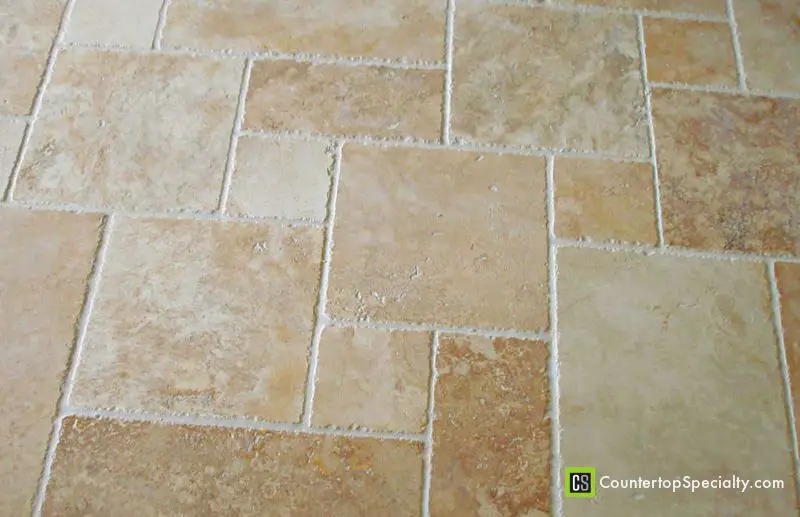 French Pattern Travertine Tile Flooring
Travertine floor tile is an immensely popular choice for kitchen and bathroom flooring due to its warm, soft tones, pleasing texture, durability, low-maintenance and cozy feeling of rustic charm and Old-World romance.
Travertine is but one of several types of natural stone flooring. All natural stone is forged over millions of years by Mother Earth and provide one-of-a-kind design options.
The sensual patterns of travetine tile come from unique veining characteristics and from gradations, swirls
and shifts in the density and tone of the inherent color.
Although typically less dramatic than its sister marble, the color and pattern can be equally captivating.
And of course it is perfect for that Tuscan design theme.
Pits and pores developed from the bubbling hot springs deep in the earth near where travertine was formed. . . enhancing its rustic beauty.
Filling Pits & Pores in Travertine Tile
Travertine tile has naturally occurring pits, pores, and holes of various sizes.
These pits can and should always be filled with a travertine filler, epoxy, or sanded grout, otherwise they will simply collect dirt.
After filling the holes during installation these are not a problem and the tile will still have that rustic look with the proper finish.
Finish Options for Travertine Floor Tile
Surface finish options for your travertine tile flooring, countertop or travertine shower are numerous such as:
- Honed
- Tumbled
- Brushed
- Undulated
- Hammered
- Pillowed
- Polished
A "honed" (matte) finish is most popular for bathroom or kitchen flooring since it is doesn't show dust and dirt (like a polished surface), is easy to clean and wears well providing an excellent and safe non-slip surface.
Travertine tile is typically not recommended for kitchen countertops due to it's sensitivity to acidic foods and drinks (coffee, alcohol, fruit juice, salad dressing, etc.).
When used on a countertop a honed surface is typically the most popular finish as well to help hide the etching. A honed travertine tile is more susceptible to staining though.
Polished travertine, however, is extremely stain-resistant and often does not require sealing.
A honed finish will keep you from fretting about dull spots from etching the surface (more on this below). A honed surface will still etch, but it is not nearly as noticeable as on polished travertine.
Also, a polished finish will not hold up to foot traffic as well as a honed, tumbled or other more rustic-type finish. That shiny polished finish will wear away in time (years not months) and require professional re-polishing (expensive!).
Travertine Tile Sizes
Tile Sizes for travertine flooring range from miniature mosaics up to huge 36-inch squares. Rectangular squares are also common.
You can find travertine floor tile in almost any dimension:
- 1 inch x 1 inch
- 3 x 3 inches
- 4 x 4 inches
- 6 x 6 inches
- 8 x 8 inches
- 12 x 12 inches
- 16 x 16 inches
- 18 x 18 inches
- 24 x 24 inches
- 36 x 36 inches
- 3 x 6 inches
- 6 x 12 inches
- 8 x 16 inches
- 12 x 24 inches
- 18 x 18 inches
- 18 x 36 inches
The variety of sizes and shapes make this stone a great choice for creating simple or intricate floor patters, backsplashes, tub decks, showers, walls and fireplace hearths.
Cleaning & Sealing a Travertine Floor
Cleaning
Cleaning a travertine tile floor is pretty simple but you must use the correct products.
- First, sweep up all dust and debris.
- Mop with a quality natural stone cleaner and microfiber mop.
We recommend using the Stone Care Floor Tile Cleaner. It was developed by stone care professionals specifically for safe and effective use on granite, marble, travertine, and all types of natural stone.
We haven't found another that works better.
Just mix with water, mop, and allow to dry. No rinsing needed. Using a microfiber mop works best but it's not required. And mopping until mostly dry will ensure a streak-free shine.
Most common household cleaners (generic and brand-name) may cause damage to the finish.
Acids and other harsh chemicals or cleaners can cause dull spots from etching which is physical damage to the stone.
For more in-depth cleaning information go to cleaning travertine.
Sealing
Like marble, travertine floor tile and countertops must be treated with care.
Treatment with an impregnating sealer (when needed) will protect travertine from stains.
Again... travertine is actually quite dense and often will not need sealing when polished. Other finish types will usually need sealing.
Test your travertine porosity to determine if sealing is needed or not. Even when sealed a stain is possible if a liquid is left on the surface for a long time.
Stains are usually easy to remove using the Granite & Marble Stain Remover. Fears you may have about accidentally ruining your stone are really unnecessary.
Conclusion
Travertine floor tile is a classic, luxury material that never really goes out of style. It's at home within any type of bath or kitchen design. It will wear and age wonderfully with proper care and maintenance.
Actually, its natural beauty and patina is only enhanced through years of use.
Unlike almost every other building material in your home . . . stone will not decay.
Witness the Roman Colosseum . . . it is built with travertine many centuries ago in 80 AD and still standing!
The many tile size and shape options allow for broad floor pattern and design possibilities as well as installation in nearly any area of the home.
Flooring is the most popular use, but travertine tile is a popular choice for showers, tub surrounds, backsplashes, patios, pool decking, and even driveways.
Travertine is easy to clean and maintain once you learn the Do's and Don'ts of cleaning travertine. It is very durable.
Travertine Floor Tile Questions & Answers
Learn even more! Click on the links below to see questions submitted by other visitors with complete answers and great info.
New Travertine Floors Dusty and Gritty
QUESTION: I installed travertine flooring in my house - about 1800 sq ft. I did not apply a sealer yet. My issue is the floors never feel clean - they …
Honing Lippage on Travertine Floor
QUESTION: I had Travertine floor tile installed and the tiles were not level. There were 1/16th to 1/8th inch edges in some areas.
The installer …
Filling Holes in Travertine Floor
QUESTION: I have travertine floor tile in my guest bathroom as well as on the tub surround and in a separate shower.
How should the holes …